Most horror stories ask readers to fear what they do not understand.
The Funeral Director takes a different approach.
Instead of beginning with monsters, violence, or shocking events, the novel begins with something far more familiar: death. Not the dramatic version often seen in fiction, but the reality people eventually face in one form or another. Loss. Grief. The quiet moments that follow after someone is gone.
That foundation gives the story a different kind of weight.
At the center of the novel is Harold Greaves, a funeral director who spends his life surrounded by death. To him, the dead are predictable. They ask for nothing. They create no conflict. They simply remain where they are placed.
For many readers, that idea may seem unusual at first. Yet it reveals something important about the novel. Death itself is not treated as a spectacle. It is treated as part of life.
That perspective changes the way the story unfolds.
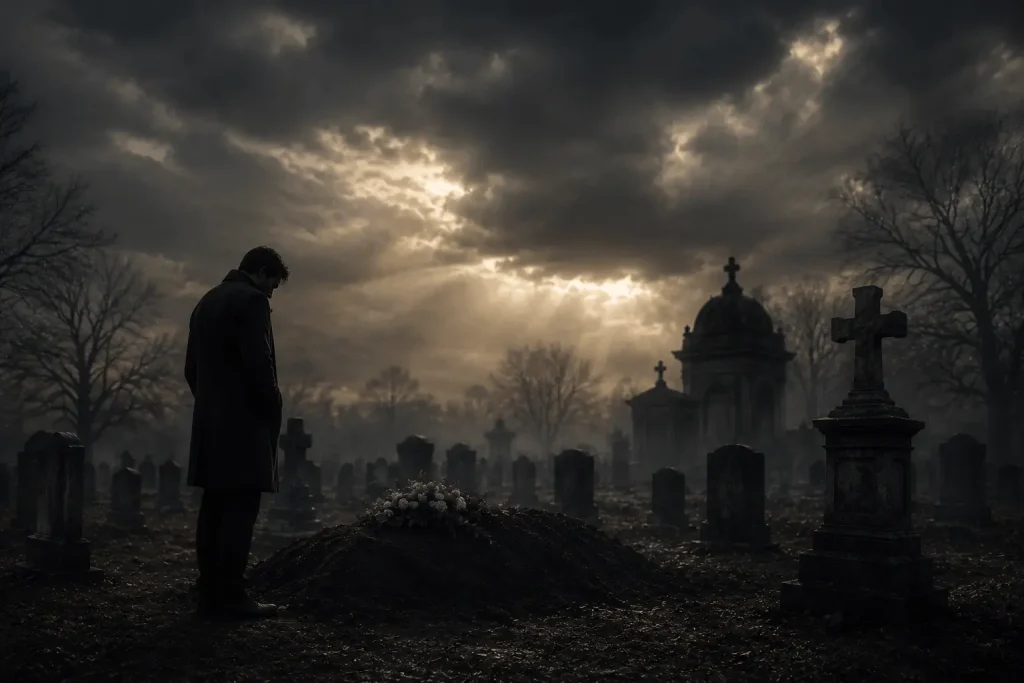
One reason The Funeral Director feels so convincing is that it understands the world surrounding loss. Funeral homes, cemeteries, mourning families, and the quiet routines that follow a death are presented with a sense of familiarity rather than exaggeration. These places feel lived in. The emotions feel genuine. The people react in ways that feel human.
Because of that, readers become invested in the story long before the horror begins to take hold.
The novel also explores a truth that many people recognize but rarely discuss. Death does not only leave behind sadness. It can leave questions. Regrets. Unfinished conversations. Memories that continue to follow us long after a person is gone.
Those emotions often stay with people far longer than they expect.
That emotional reality runs beneath the surface of The Funeral Director. Even as strange events begin to unfold, the story remains connected to the experiences that make loss so difficult to process. The result is a novel that feels grounded, even when it ventures into unsettling territory.
What makes the book memorable is not simply its suspense or mystery. It is the way those elements are tied to emotions readers already understand. Fear becomes more powerful when it grows from something familiar.
Many horror novels focus on what is hiding in the darkness.
The Funeral Director reminds us that some of the most unsettling questions begin long before the darkness arrives.
That balance between emotional truth and psychological tension is what gives the novel its lasting impact. Readers may come for the mystery, but they often leave thinking about something much deeper: how people cope with loss, what they choose to hold on to, and how the past can continue shaping the present.
Long after the final chapter, those ideas remain.
And that may be the reason The Funeral Director is so difficult to forget.